
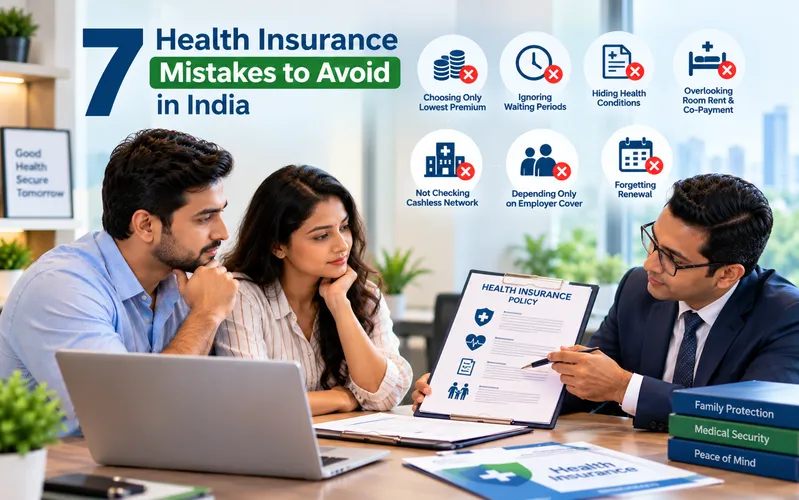
7 Mistakes to Avoid When Buying Health Insurance in India – A Complete Guide for 2026
Planning to buy Health Insurance? One small mistake today could create a big financial problem during a medical emergency.
Health Insurance helps individuals and families manage eligible medical expenses arising from illness, accidents and hospitalisation. However, choosing the right policy is not always simple.
Many people in India purchase Health Insurance by looking only at the premium, without understanding important details such as waiting periods, room rent limits, co-payments and exclusions.
These conditions can make a significant difference when you need to make a claim.
At Niraj Shinde – Insurance Expert, Mumbai, we help individuals and families understand available Health Insurance options so they can make informed decisions.
Here are seven common mistakes you should avoid before purchasing a Health Insurance policy.
Mistake 1 – Choosing Health Insurance Based Only on the Lowest Premium
One of the most common mistakes is selecting the cheapest Health Insurance plan without checking its actual coverage.
A lower premium may seem attractive, but some policies may include higher deductibles, mandatory co-payments, specific limits or restricted benefits.
For example, two Health Insurance plans may offer a sum insured of ₹5 lakh but have different room rent conditions, hospital networks and exclusions.
What should you do instead?
Compare the following before buying:
Sum insured and coverage benefits
Room rent and ICU limits
Co-payment and deductible conditions
Pre- and post-hospitalisation coverage
Hospital network and cashless facilities
Waiting periods and exclusions
Remember: Affordable premiums are important, but suitable coverage matters more than simply choosing the cheapest policy.
Mistake 2 – Not Checking Waiting Periods for Medical Conditions
Many people assume that every illness will be covered immediately after buying Health Insurance.
However, health policies can include waiting periods for pre-existing diseases and certain specified treatments.
A waiting period is the time during which particular conditions or treatments may not be covered, even though the policy is active.
For example, a person buying insurance with a disclosed pre-existing medical condition may need to complete the applicable waiting period before related expenses become eligible for coverage.
Under the IRDAI health insurance framework introduced in 2024, applicable waiting periods for pre-existing diseases and specified conditions are generally capped at 36 months. Always check the policy wording and current requirements.
What should you do instead?
Read the waiting period details before purchasing. Understand whether your policy has an initial waiting period, a pre-existing disease waiting period or waiting periods for specific procedures.
Mistake 3 – Hiding Existing Health Conditions
Some applicants do not disclose medical conditions because they are worried about higher premiums or rejection.
This can create serious problems later.
If the insurer asks about existing illnesses, previous surgeries, ongoing medication or other medical information, provide complete and accurate answers.
Material non-disclosure or misrepresentation can affect insurance coverage or claims, subject to applicable policy terms and regulations.
What should you do instead?
Disclose relevant medical history accurately.
Answer all proposal form questions truthfully.
Share medical reports when requested.
Review the completed proposal before submission.
Keep copies of the information submitted.
Important: A properly disclosed medical condition does not automatically mean a claim will be covered. Coverage depends on insurer acceptance, policy conditions and applicable waiting periods.
Mistake 4 – Ignoring Room Rent Limits and Co-Payment Conditions
Imagine selecting a hospital room without checking your policy’s room rent restrictions.
Some Health Insurance policies have room category limits or conditions that can affect how much of the hospital bill the insurer will pay.
Similarly, certain plans include co-payment clauses.
A co-payment means that you must pay a specified percentage of the admissible claim amount.
Example:
Suppose the admissible medical expenses are ₹2 lakh and the policy requires a 10% co-payment.
Your share would be ₹20,000, while the remaining ₹1.8 lakh may be payable by the insurer, subject to other conditions and available coverage.
What should you do instead?
Check room rent eligibility, proportionate deduction conditions, co-payment percentages, deductibles and treatment-specific limits.
Understanding these terms before hospitalisation can help you plan for possible out-of-pocket expenses.
Mistake 5 – Not Checking the Cashless Hospital Network
Cashless Health Insurance can be helpful during medical emergencies because eligible expenses may be settled directly between the hospital and insurer.
However, the availability of a cashless facility depends on the insurer’s applicable arrangements and claims process.
A nearby hospital may not always be included in your insurer’s network, and even network hospital treatment requires admissibility and authorisation.
What should you do instead?
Before purchasing a Health Insurance policy, check:
Network hospitals near your home
Relevant hospitals near your workplace
Cashless treatment procedures
Emergency hospitalisation requirements
Reimbursement claim options
Documents required during a claim
For families living in Mumbai, consider hospitals in accessible areas such as Dadar, Prabhadevi, Worli, Lower Parel, Mahim and surrounding localities.
Mistake 6 – Depending Only on Employer Health Insurance
Many working professionals receive Group Health Insurance through their employers.
This benefit can be valuable, but depending entirely on it may create a coverage gap.
Employer-sponsored insurance benefits may change, and coverage may end when you leave your organisation, depending on the policy arrangements.
The available sum insured may also be insufficient for your family’s needs.
What should you do instead?
Evaluate whether a separate individual or family Health Insurance policy would provide useful additional protection.
You can also explore eligible Top-Up or Super Top-Up Health Insurance options to supplement your existing medical coverage.
Having personal insurance may be particularly important when changing jobs, becoming self-employed or planning for retirement.
Mistake 7 – Forgetting to Renew Your Health Insurance on Time
Purchasing a Health Insurance policy is only the first step. Maintaining continuity is also important.
Late renewal can create complications relating to coverage and continuity benefits.
IRDAI’s health insurance framework provides specified grace periods, generally 15 days for monthly premium instalments and 30 days for quarterly, half-yearly or annual premium instalments.
The availability of coverage during the grace period depends on the applicable policy and premium-payment provisions.
What should you do instead?
Record your policy renewal date.
Set reminders before the premium due date.
Review policy benefits before renewal.
Check whether your sum insured remains suitable.
Renew within the applicable timelines.
Tip: Review your Health Insurance every year, especially after major changes in your family or financial circumstances.
How to Choose the Right Health Insurance Plan in India
Avoiding the seven mistakes above can help you compare insurance options more carefully.
Before purchasing a policy, use this checklist:
| What to Check | Why It Matters |
|---|---|
| Sum insured | Determines the maximum available coverage, subject to policy conditions |
| Waiting periods | Identifies when certain conditions become eligible |
| Room rent limits | Can affect admissible hospital expenses |
| Co-payment | Determines your share of eligible claims |
| Deductibles | Specifies expenses payable before insurer benefits apply |
| Hospital network | Helps you understand available cashless facilities |
| Exclusions | Identifies what the policy does not cover |
| Restoration benefit | Explains when additional coverage may become available |
| Renewal terms | Helps maintain policy continuity |
Ask for and read the insurer’s Customer Information Sheet (CIS). It summarises important coverage conditions, exclusions, limits and claims procedures in a simpler format.
Why Health Insurance Planning Matters for Families in Mumbai
Medical expenses can differ significantly depending on the type of treatment, hospital and healthcare needs.
Families in Mumbai should consider both the cost of eligible medical treatment and their ability to manage expenses that insurance may not cover.
Whether you are a working professional in Dadar, a family living in Prabhadevi or a business owner in Lower Parel, choosing suitable Health Insurance involves more than comparing premium amounts.
A careful review of coverage, conditions and financial needs can help you make an informed decision.
Why Choose Niraj Shinde – Insurance Expert?
Understanding Health Insurance policy documents can be difficult, especially when they contain technical terms and detailed conditions.
At Niraj Shinde – Insurance Expert, we help individuals and families explore insurance options and understand important policy information.
Our assistance focuses on:
Individual Health Insurance
Family Health Insurance
Mediclaim Policy Information
Health Insurance Renewals
Group Health Insurance
Claims Documentation and Procedures
Understanding Policy Benefits and Exclusions
Our objective is to help customers understand available insurance protection before making a decision.
Frequently Asked Questions
-
1. What Is the Biggest Mistake When Buying Health Insurance?One common mistake is choosing a policy based only on its premium without checking the coverage, waiting periods, exclusions, deductibles and hospital network.
-
2. Should I Buy Health Insurance If My Company Already Provides It?Employer Health Insurance is useful, but a separate individual or family policy may provide additional protection and continuity when employment circumstances change.
-
3. Does Health Insurance Cover Pre-Existing Diseases?Pre-existing diseases may be covered after the applicable waiting period if accepted and covered under the policy. Coverage depends on the insurer’s underwriting decision and policy terms.
-
4. What Happens If I Forget to Renew My Health Insurance?A grace period may allow renewal without losing specified continuity benefits, but coverage during that period depends on the applicable rules and policy conditions. Renewing before the due date is preferable.
-
5. What Is Co-Payment in Health Insurance?Co-payment is the percentage of admissible claim expenses that the policyholder must pay under the policy’s terms.
-
6. Is Cashless Treatment Available at Every Hospital?No. Cashless facilities depend on the insurer’s current hospital arrangements, applicable procedures and claim authorisation. Check eligibility before treatment whenever possible.
-
7. Can I Change My Health Insurance Company?Eligible policyholders may apply for portability in accordance with prevailing insurance regulations. Transferable continuity benefits and acceptance remain subject to applicable requirements.
-
8. How Do I Compare Health Insurance Plans in Mumbai?Compare coverage limits, premiums, waiting periods, exclusions, room rent conditions, co-payments, cashless facilities and claims processes. You can contact Niraj Shinde – Insurance Expert for assistance in understanding available options.
Looking for Health Insurance Guidance in Mumbai?
Buying Health Insurance is an important decision for your family’s financial protection.
Before selecting a policy, make sure you understand the benefits, restrictions and conditions.
Niraj Shinde – Insurance Expert
Phone: +91 89760 78348
Email: info@nirajishindeinsurance.com
Location: Prabhadevi, Mumbai, Maharashtra – 400025
Explore Health Insurance Plans | Enquire on WhatsApp
Disclaimer: Insurance coverage, benefits, premiums and claims are subject to the respective insurer’s policy wording, eligibility conditions and applicable exclusions. Information provided here is for general educational purposes.